Gallbladder Stones:
Quick Summary: Gallstones are solid particles formed inside the gallbladder. They may cause pain, nausea, digestive problems, and complications if untreated.
🩺 What Are Gallbladder Stones?
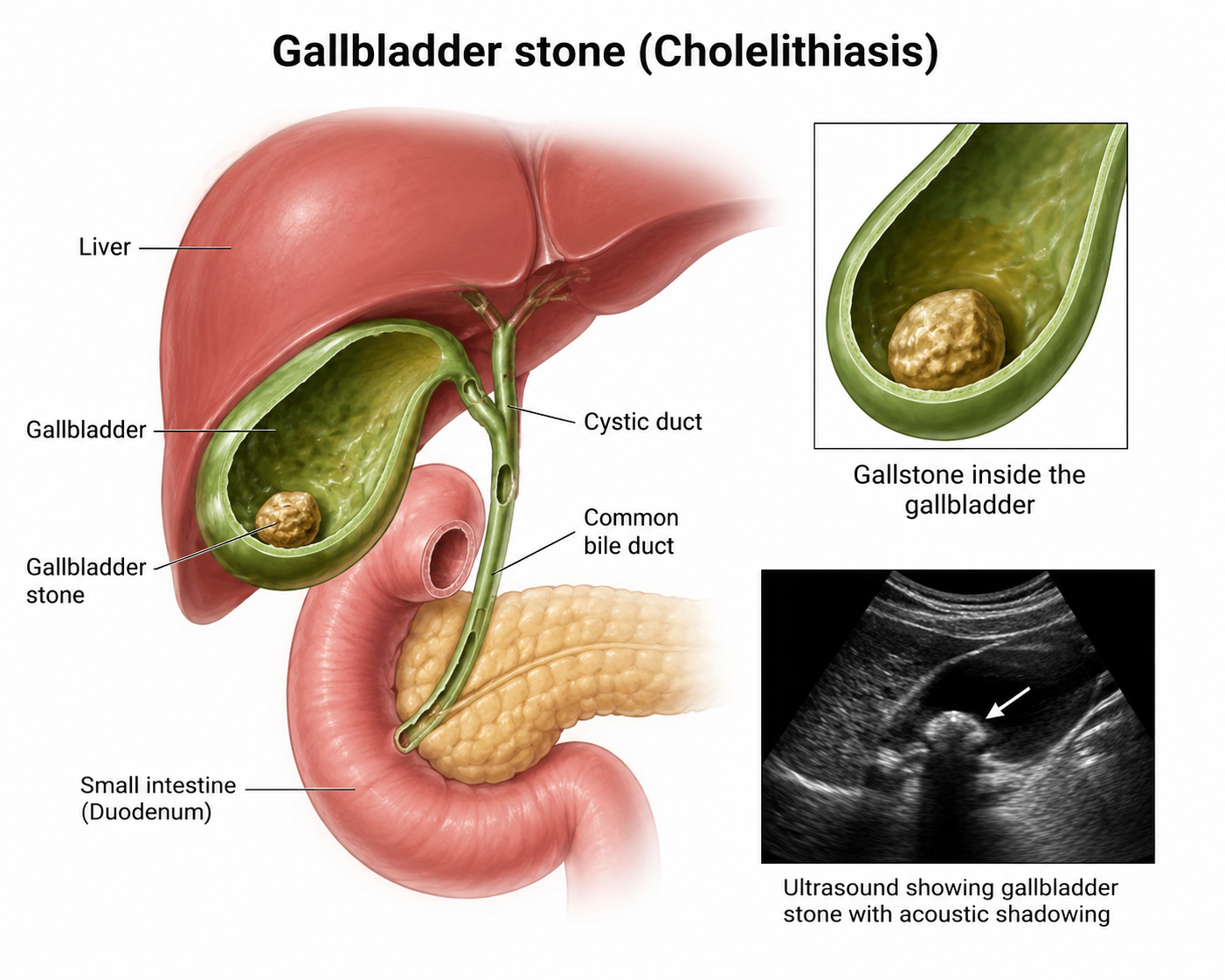
Gallbladder stones, also called gallstones or cholelithiasis, are hard deposits that form inside the gallbladder — a small pear-shaped organ located below the liver.
The gallbladder stores bile, a digestive fluid produced by the liver that helps break down fats. When substances in bile such as cholesterol or bilirubin become unbalanced, they can harden and form stones.
🔍 How Gallstones Form
Gallbladder stones are solid particles made of cholesterol or bilirubin that form inside the gallbladder. Sometimes these particles cannot pass out of the gallbladder.
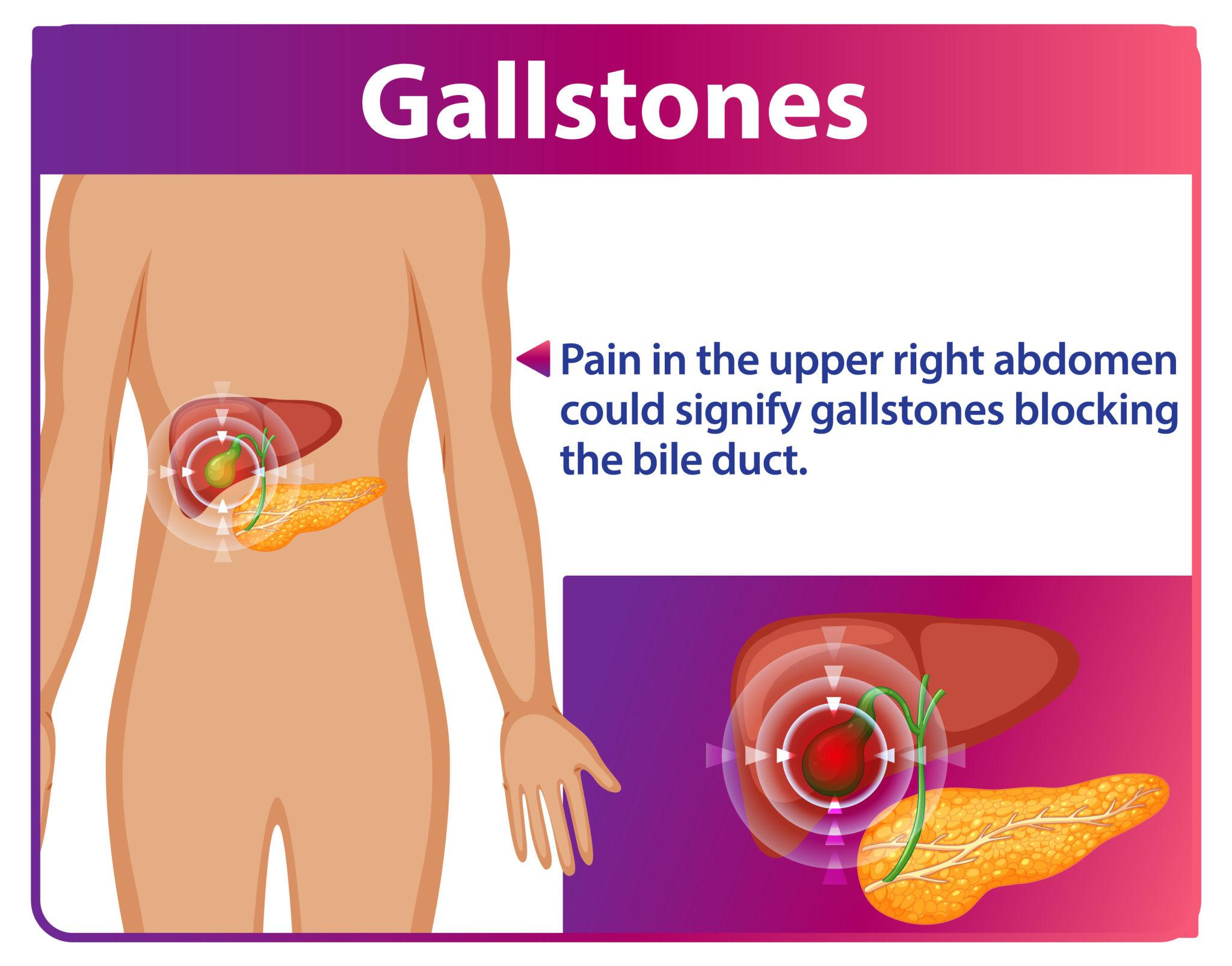
Because of this, severe and sudden pain occurs in the upper right abdomen, especially after eating heavy or fatty meals. The stones can obstruct the flow of bile, leading to intense, sharp pain in the right upper abdomen. The pain may last for several hours and can radiate to the right shoulder or back.
🟡 Types of Gallstones
1️⃣Cholesterol Stones
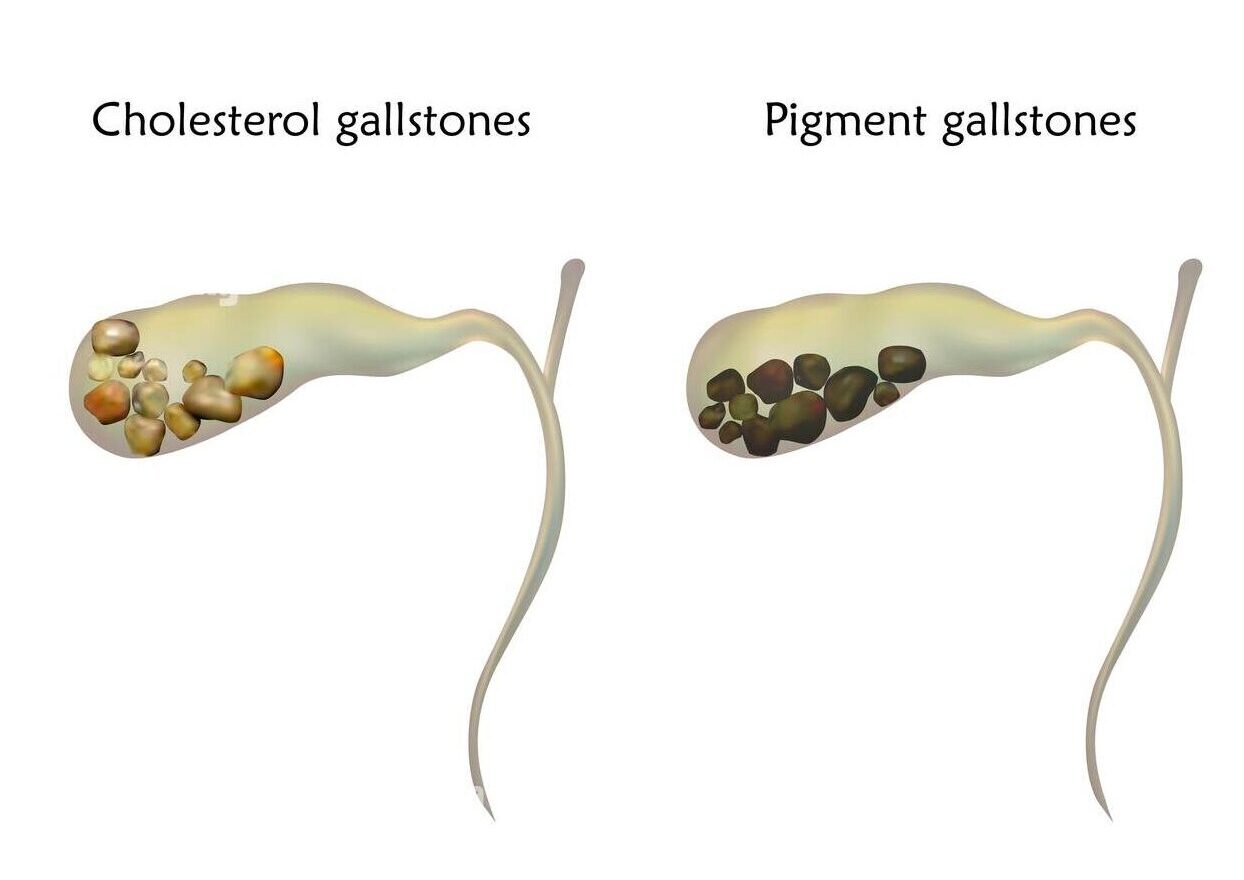
Cholesterol stones are the most common type of gallstone, accounting for approximately 80% of cases. These stones are made up of hardened cholesterol, which can accumulate in the gallbladder when there is an excess of cholesterol in the bile.
2️⃣Pigment Stones
Pigment gallstones are a specific type of gallstone that form when there is excess bilirubin in the bile. Bilirubin is a yellow-orange pigment produced when the body breaks down old red blood cells. When bilirubin levels become abnormally high, it can combine with calcium and form hard stones called pigment stones.
⚠ Gallbladder Stone Pain Area
Gallbladder stone pain (biliary colic) primarily occurs in the upper right abdomen, just below the rib cage. It frequently spreads to the center of your abdomen (below the breastbone), the upper back (between the shoulder blades), and the right shoulder.
The pain is typically sharp and cramping, frequently triggered by eating fatty meals, and can last anywhere from 30 minutes to several hours.
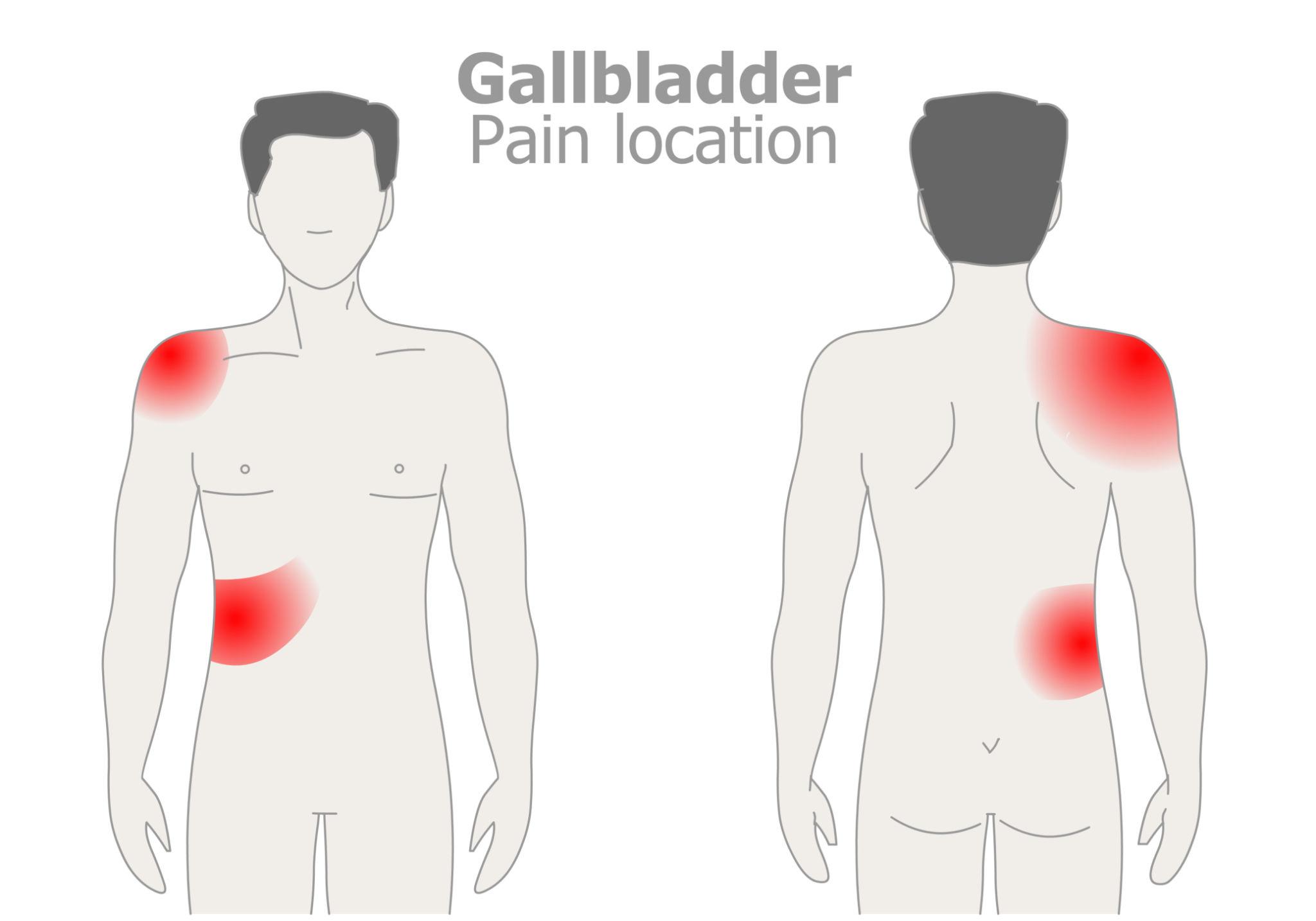
📍 Common Pain Areas
- Upper right abdomen — most common location
- Center of the upper abdomen near the stomach area
- Right shoulder
- Upper back, especially between the shoulder blades
The pain often starts suddenly and may become severe and sharp.
⏰ When Does the Pain Occur?
- After eating fatty or oily foods
- After heavy meals
- At night or early morning
This happens because the gallbladder contracts to release bile,
and a gallstone may block the bile duct.
🔥 Characteristics of Gallbladder Pain
- Sudden onset
- Sharp or cramping pain
- May last from 30 minutes to several hours
- Can come and go
- May worsen after meals
🤢 Other Symptoms Along With Pain
- Nausea
- Vomiting
- Bloating
- Indigestion
- Fever (if infection develops)
- Yellow skin or eyes (jaundice)
🚨 Seek Immediate Medical Help If:
- Pain is severe and continuous
- Fever or chills occur
- Skin or eyes become yellow
- Persistent vomiting happens
- Difficulty breathing due to pain develops
🔬 Diagnosis
💊 Treatment Options
Treatment for gallbladder stones depends on the size of the stones, symptoms, and complications. Some people may not need immediate treatment, while others may require surgery.
🩺 1. Observation (No Symptoms)
If gallstones are not causing pain or other symptoms, doctors may only monitor the condition regularly.
💉 2. Pain Management
Medicines may be given to reduce pain, inflammation, nausea, and vomiting during gallbladder attacks.
💊 3. Medicines to Dissolve Stones
Oral medicines such as Ursodeoxycholic Acid may help dissolve small cholesterol stones.
- Treatment may take months or years
- Works only for certain small stones
- Stones may return after stopping medicine
🏥 4. Laparoscopic Surgery
The most common and effective treatment is Laparoscopic Cholecystectomy, a minimally invasive surgery to remove the gallbladder.
Estimated Cost: ₹80,000 – ₹1,50,000
- Small cuts are made in the abdomen
- Recovery is usually faster
- Most people return home within 1–2 days
🚨 Emergency Treatment May Be Needed If:
- Severe abdominal pain continues
- High fever or chills occur
- Jaundice develops
- Gallbladder infection occurs
- Pancreatitis develops
⚠ Possible Complications
- Gallbladder inflammation (Cholecystitis)
- Jaundice
- Pancreatitis
- Bile duct blockage
- Severe infection
🥗 Diet Recommendations
A healthy diet can help reduce gallbladder stress, improve digestion, and manage gallbladder stone symptoms. Eating low-fat and high-fiber foods is generally recommended.
✅ Foods You Should Eat
- Fresh fruits like apples, papaya, pears, and bananas
- Green vegetables and leafy vegetables
- Whole grains like oats, brown rice, and wheat
- High-fiber foods
- Low-fat dairy products
- Lean protein such as dal, beans, lentils, and sprouts
- Moong dal and urad dal
- Plenty of water throughout the day
❌ Foods to Avoid
- Fried foods
- Oily and spicy foods
- Fast food and junk food
- Butter, cheese, and cream in excess
- Processed and packaged foods
- Soft drinks and sugary beverages
- Red meat with high fat content
💧 Healthy Habits
- Eat smaller meals regularly
- Avoid overeating
- Maintain a healthy weight
- Exercise regularly
- Avoid sudden weight-loss diets
- Drink water frequently
🌿 Additional Tips
Some people include apple cider vinegar and coconut water in moderate amounts as part of their routine. Always consult a doctor before trying home remedies or supplements.
👨⚕️ When to Visit a Doctor for Gallbladder Stones
Gallbladder stones may sometimes remain silent without symptoms, but medical attention is important if pain or complications develop. Early treatment can help prevent serious health problems.
⚠ Visit a Doctor If You Have:
- Repeated pain in the upper right abdomen
- Pain after eating oily or fatty foods
- Pain spreading to the back or right shoulder
- Nausea or vomiting
- Bloating or indigestion frequently
- Loss of appetite
🚨 Seek Immediate Medical Help If:
- Severe abdominal pain lasts for several hours
- High fever or chills occur
- Yellowing of the skin or eyes (jaundice)
- Persistent vomiting happens
- Dark urine or pale stools develop
- Difficulty breathing because of severe pain
🩺 Why Early Consultation Matters
Untreated gallstones may lead to serious complications such as:
- Gallbladder infection
- Gallbladder inflammation (Cholecystitis)
- Blocked bile ducts
- Jaundice
- Pancreatitis
📌 Medical Advice
If you experience recurring symptoms, consult a doctor or gastroenterologist for proper diagnosis and treatment. An ultrasound scan is commonly used to confirm gallstones.
❓ Frequently Asked Questions
Can gallstones disappear naturally?
Some small stones may remain silent,
but symptomatic gallstones often require treatment.
Is surgery always necessary?
Not always.
If there are no symptoms,
doctors may only monitor the condition.
Can fatty food trigger pain?
Yes.
Fatty meals can trigger gallbladder contractions and worsen pain.
Stay Healthy & Stay Informed
Early diagnosis and healthy habits can help prevent complications.
ℹ️ Disclaimer: This article is intended for educational purposes only and should not replace professional medical advice, diagnosis, or treatment. Always consult a qualified healthcare professional if you have persistent, severe, or concerning symptoms.