Understanding Newborn Jaundice
📍 What is Jaundice?
Jaundice is a condition in which the skin, whites of the eyes, and sometimes the mucous membranes turn yellow because there is too much
bilirubin in the blood.
Bilirubin is a yellow substance made when the body breaks down old red blood cells. Normally, the liver processes bilirubin and removes it through bile. However, in newborn babies, the liver is still developing, so bilirubin can build up more easily. As a result, the baby’s skin and
eyes may appear yellow.
👶 Newborn Baby Jaundice
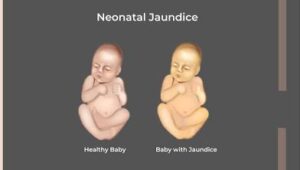
Newborn jaundice is a common condition that causes a baby’s skin and the whites of the eyes to appear yellow. It occurs because there is a high level of bilirubin in the baby’s blood. Bilirubin is a yellow substance produced when old red blood cells break down.
Jaundice affects many newborns during the first few days of life and is usually temporary. In most cases, it resolves on its own. However, some babies may require medical treatment if bilirubin levels become too high.
🩺 What Causes Jaundice in Newborns?
A newborn’s liver is still developing and may not be able to remove bilirubin efficiently. This can lead to a buildup of bilirubin in the blood.
🔍Common causes include:
🔹 Physiological Jaundice
This is the most common type of jaundice and usually appears 2–3 days after birth.
🔹 Breastfeeding Jaundice
Occurs when a baby does not receive enough breast milk during the first few days of life.
🔹 Breast Milk Jaundice
Some breastfed babies may develop prolonged jaundice due to substances present in breast milk. This is usually harmless.
🔹 Blood Group Incompatibility
If the mother’s and baby’s blood types are incompatible, increased red blood cell breakdown may occur.
🔹 Premature Birth
Premature babies have less mature livers and are more likely to develop jaundice.
🔹 Infections or Liver Disorders
Certain medical conditions can interfere with bilirubin processing and lead to Jaundice.
⚠️ Symptoms of Jaundice in Newborn Babies
Jaundice occurs when bilirubin levels become elevated, causing a yellow discoloration of the skin and eyes.
🔍 Common Symptoms:
🔹 Yellow Eyes
Yellowing of the whites of the eyes is often one of the earliest signs and may be easier to notice in natural daylight.
🔹 Yellow Skin
Usually starts on the face and forehead, then may spread to the chest, abdomen, arms, and legs as bilirubin levels rise.
🔹 Excessive Sleepiness
The baby may sleep more than usual or be difficult to wake for feeds.
🔹 Poor Feeding
Reduced interest in breastfeeding or bottle-feeding or feeding less often than normal.
🔹 Dark Urine
A newborn’s urine is usually very light or nearly colorless. Dark yellow urine can be a warning sign.
🔹 Pale or White Stools
Normal baby stools are usually yellow, mustard-colored, or green. Pale, white, or clay-colored stools need urgent medical evaluation.
🔹 Irritability or High-Pitched Crying
The baby may become unusually fussy, difficult to console, or cry in a high-pitched way.
🚨 Severe Symptoms (Emergency):
Seek immediate medical care if your baby has:
- Extreme sleepiness
- Refuses feeding
- Fever
- Arching of the back
- Stiff body
- Seizures
These symptoms may indicate severe neonatal jaundice requiring urgent treatment.
🩺 Simple Home Check for Jaundice:
Check your baby in natural daylight:
- Gently press your baby’s forehead or nose.
- Release the pressure after a moment.
- If the skin appears yellow where you pressed, jaundice may be present.
🚨 When to Contact a Pediatrician:
- If your baby’s eyes or skin appear yellow
- If the jaundice worsens or spreads to the legs
- If your baby is not feeding well
- If jaundice lasts longer than 2–3 weeks
Early diagnosis and treatment, such as phototherapy, are highly effective and can help prevent serious complications.
👶 Typical Bilirubin Levels in Newborns:
Bilirubin levels vary depending on the baby’s age in hours and days. Doctors interpret the result based on the baby’s age, weight, feeding, gestational age, and overall health.
*These are general reference values only. Doctors interpret bilirubin levels based on the baby’s age in hours, gestational age, weight, feeding, and overall health.
🩺 How Is Newborn Jaundice Diagnosed?
To diagnose newborn jaundice, the doctor may:
- Perform a physical examination
- Check for yellowing of the skin and eyes
- Measure bilirubin levels through a blood test
- Use a transcutaneous bilirubin meter to estimate bilirubin levels
Additional tests may be required if jaundice persists beyond two to three weeks.
📍Treatment for Newborn Jaundice
🔹Frequent Feeding
Frequent breastfeeding or formula feeding helps the baby eliminate bilirubin through urine and stool.
🔹Phototherapy
Phototherapy is the most common treatment for moderate to severe jaundice.
During phototherapy, the following usually happens:
-
-
- The baby is placed under special blue lights that help break down bilirubin in the skin.
- The baby usually wears only a diaper to expose as much skin as possible to the light.
- Protective eye covers are used to shield the baby’s eyes.
- Bilirubin levels are monitored regularly to make sure the treatment is working.
-
Phototherapy converts bilirubin into a form that can be easily removed from the body.
🔹Exchange Transfusion
In very rare and severe cases, an exchange transfusion may be needed if bilirubin levels become dangerously high.
🧠 Can Newborn Jaundice Cause Brain Damage?
Most babies recover completely without complications. However, extremely high bilirubin levels left untreated can lead to a rare
condition called Kernicterus, which can affect the brain and nervous system.
🚨 Warning signs include:
- High-pitched crying
- Extreme sleepiness or difficulty waking up
- Poor feeding or refusal to feed
- Stiffness or arching of the body
- Seizures
🚨 Seek immediate medical attention if your baby develops any of these symptoms.
🩺 When Should You See a Doctor?
Contact your pediatrician immediately if your baby:
- Develops jaundice within the first 24 hours after birth
- Has yellowing that spreads quickly
- Becomes unusually sleepy or lethargic
- Feeds poorly or refuses feeding
- Develops a fever
- Still has jaundice beyond three weeks of age
📌Conclusion
Newborn jaundice is a common and usually temporary condition caused by elevated bilirubin levels. Early recognition, regular feeding, and timely medical evaluation help ensure a safe recovery. While most babies recover without treatment, monitoring bilirubin levels and following your pediatrician’s advice are essential for preventing complications.
If your baby’s eyes or skin appear yellow, consult a healthcare professional for proper assessment and guidance.
For a newborn with jaundice, sunlight is not a reliable treatment and should not replace phototherapy if a doctor has recommended it.
If your pediatrician says the jaundice is mild, you can expose the baby to indirect sunlight:
👶Safe Sunbathing Guidelines
- Timing: Expose your baby to early morning sun between 7:00 AM and 9:00 AM. Avoid midday and afternoon sun when UV rays are harsh.
- Duration: Keep sessions brief—limit exposure to 10 to 15 minutes per day.
- Clothing: Keep their chest and back covered to maintain warmth. You can expose their arms, legs, and face for brief periods. Use a baby hat to protect their head, neck, and eyes.
- Environment: Sunbathe in an airy, shaded, or indirectly lit area. Never expose a newborn to direct, harsh sunlight.
- Hydration: Always breastfeed or formula-feed your baby after the sunbath to replenish fluids lost through sweating.
- Sunscreen: Avoid using sunscreen on newborns under 6 months old; instead, rely entirely on shade and light clothing.
- Never leave the baby unattended.
❌ What to Avoid
- Do not sunbathe through a glass window. Glass blocks the ultraviolet rays required for Vitamin D synthesis.
- Do not overexpose. Prolonged exposure can lead to severe burns, dermatitis, and dehydration.
💡Important
- If bilirubin levels are high (for example, around 15 mg/dL or higher in many newborns, depending on age in hours and other factors), sunlight alone is usually not enough.
- Phototherapy is much more effective and is the standard medical treatment.
- Delaying recommended phototherapy can allow bilirubin levels to rise further.
❓Frequently Asked Questions (FAQs)
🔹 Is newborn jaundice common?
Yes. More than half of all newborn babies develop some degree of jaundice during the first week of life.
🔹 Can breastfed babies have jaundice longer?
Yes. Breast milk jaundice may persist for several weeks but is usually harmless.
🔹 Is sunlight helpful for jaundice?
Limited indirect sunlight may help, but it should never replace medical evaluation or phototherapy when recommended by a doctor.
🔹 How long does newborn jaundice last?
Most cases improve within 1–2 weeks, though breast milk jaundice can last several weeks.